
My Qualifications

One thing that surprises many people is that dog training isn't a regulated profession in the UK. This means that, at present, anyone can call themselves a dog trainer regardless of their experience or qualifications.
Because of this, I believe it's important to continue learning from respected organisations that promote ethical, evidence-based training. I've completed courses with the Institute of Modern Dog Trainers (IMDT), one of the UK's leading organisations for reward-based dog training. While I'm not yet IMDT accredited, I'm continuing to build my knowledge and experience with the aim of achieving accreditation in the future.
I'm committed to using kind, science-based, reward-focused methods and to being honest about my experience. If I ever feel that a dog would benefit from a trainer or clinical behaviourist with more specialist expertise, I'll always recommend the most appropriate professional. My priority is making sure every dog and owner receive the best possible support.
The 2 day Career As A Dog Trainer' Course helped me to expand my existing dog training and behaviour knowledge covering:
the science of how dogs learn
exploring body language
group class planning & dynamics
principles of canine behaviour
building a one to one consultation
behaviour modification & rehabilitation
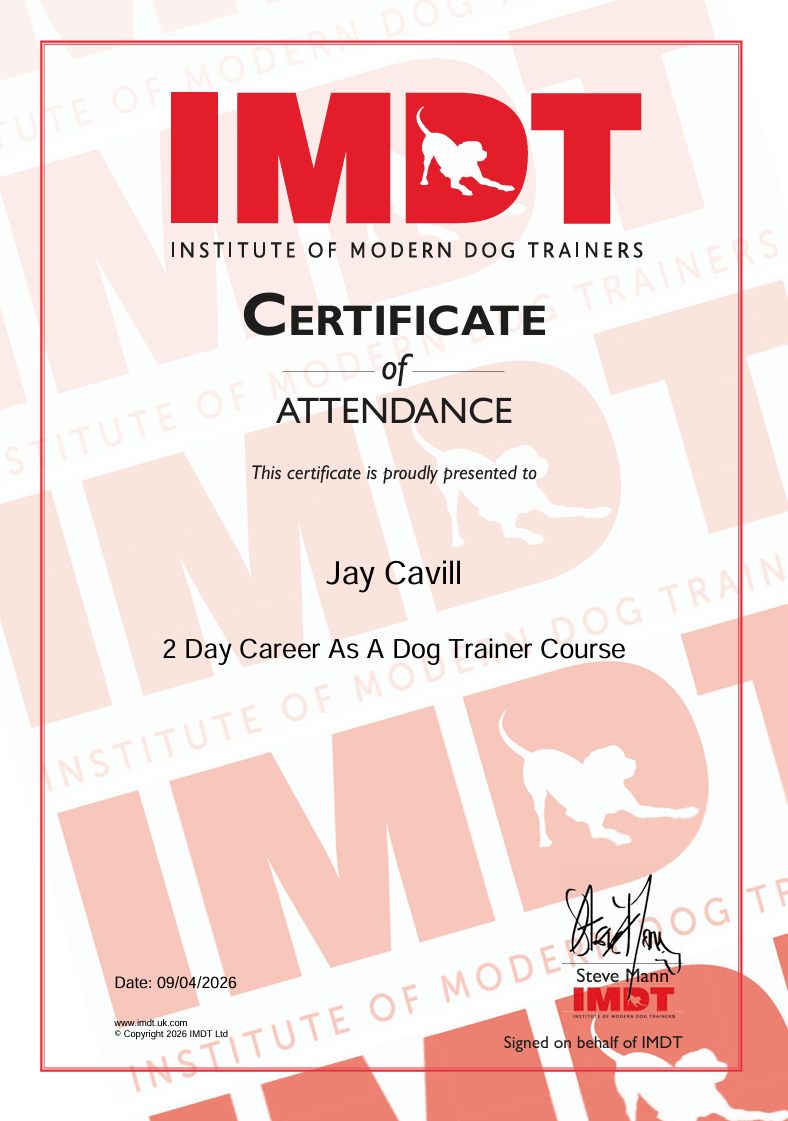
2 day career as a dog trainer course
This course is dedicated to the wonderful world of Canine Body Language with extensive video analysis
Empathy
Environmental Influences
Observation Skills
Detailed Video Analysis
Interpretation
What Every Dog Trainer Needs to Know
How to Help the Owner
How to Help the Dog
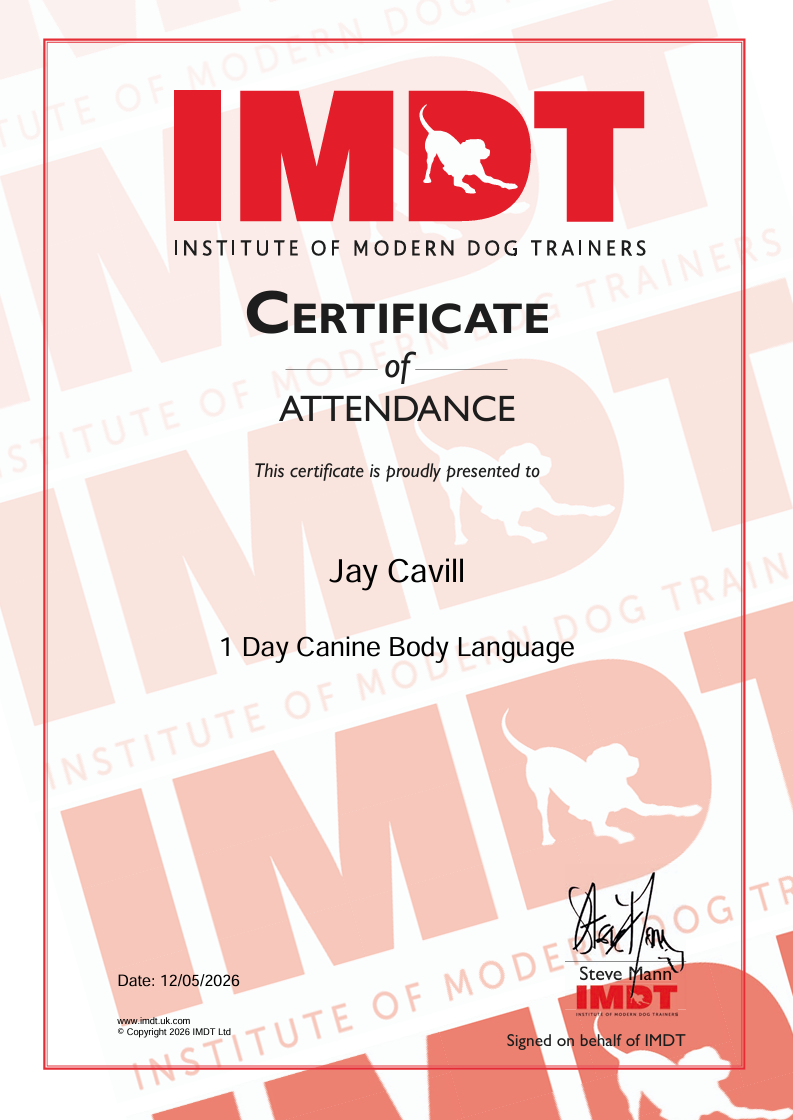
Canine Body Language
This course has given me a thorough understanding of modern, reward-based gundog training techniques that can benefit both working breeds and pet dogs.
Throughout the course I developed practical skills in:
Understanding gundog breeds, their instincts and natural behaviours.
The canine predatory motor pattern and how to channel these behaviours appropriately.
Building strong foundations through focus, engagement, impulse control and calmness.
Teaching reliable whistle cues, including recall, stop whistle and directional handling.
Reward-based retrieving from beginner through to more advanced exercises.
Developing searching and scenting skills using marked, memory and blind retrieves.
Teaching directional cues such as sends, backs and handling around obstacles.
Introducing quartering and hunting games in a safe, controlled way.
Training sit-to-flush behaviours and improving steadiness.
Managing arousal levels to help dogs make better decisions around distractions.
Creating realistic training scenarios for everyday pet dogs as well as gundog breeds.
Troubleshooting common training challenges using kind, ethical methods.

PETdog Gundog - Three Part Series (webinar)
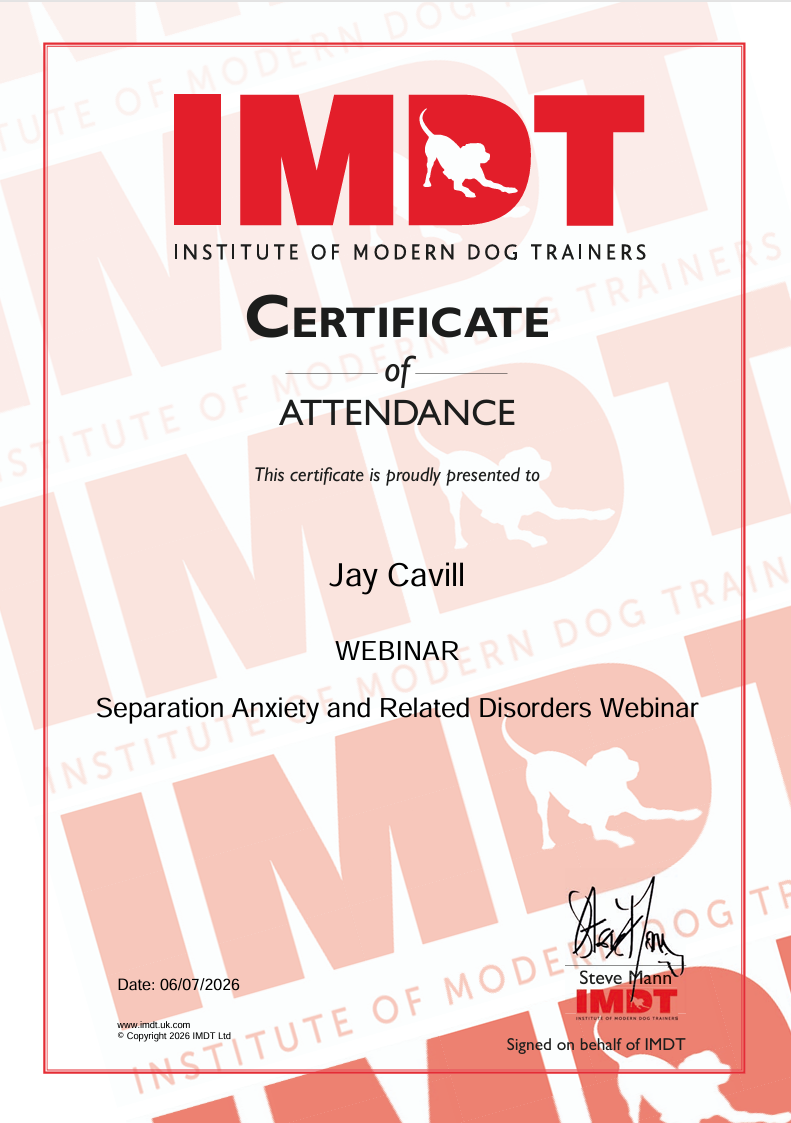
This Course was dedicated to understand a bit more about dogs and Separation Distress and Related Disorders - it's important to recognise what dogs are communicating when they are suffering from separation distress
Separation Distress / Anxiety: Definitions
Types of Separation Anxiety
Susceptible candidates
Signs of Separation Anxiety
Prevention for dogs of all ages
Related disorders and triggers
Emotional circuits
Guidance for owners
Training and rehabilitation
Modification protocols
Separation Anxiety and Related Disorders (webinar)
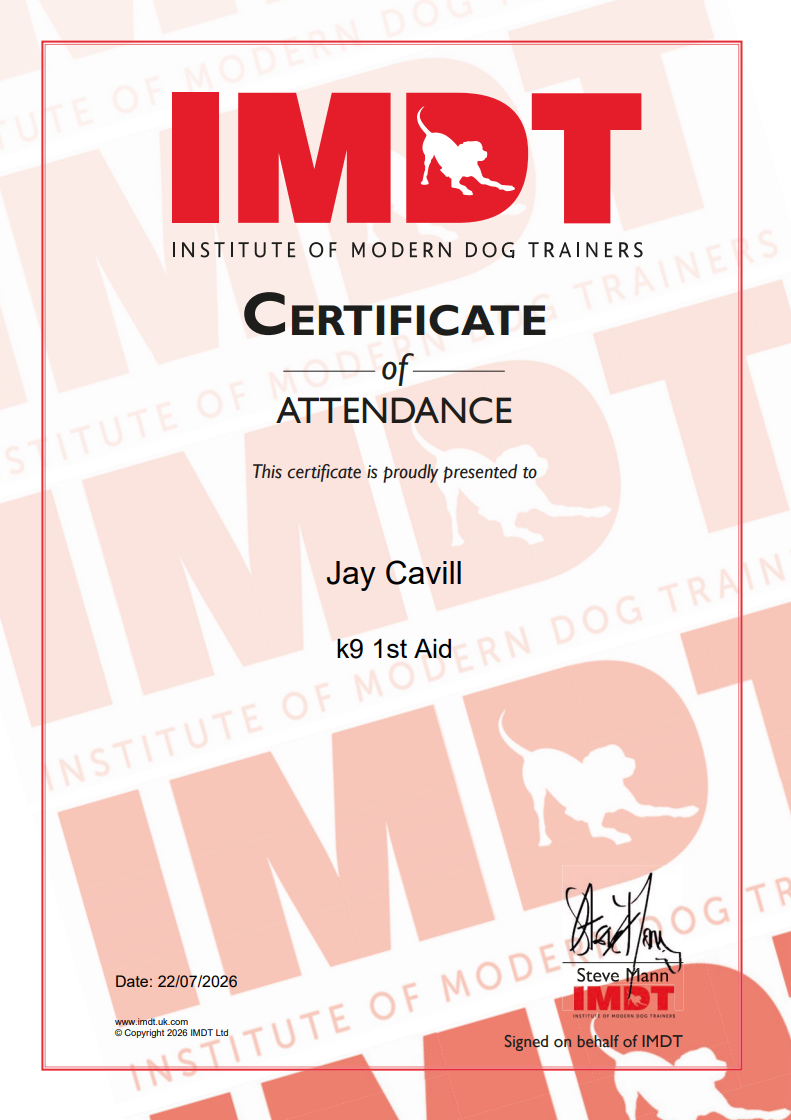
As part of my professional development, I have completed a Canine First Aid course, giving me the knowledge and confidence to recognise potential emergencies and respond appropriately while seeking veterinary care.
Recognise normal health signs and assess a dog's overall condition.
Carry out a basic health assessment, including checking vital signs and performing a body examination.
Assemble and use a canine first aid kit.
Recognise the signs of life-threatening conditions such as GDV (bloat), heatstroke, anaphylaxis and poisoning.
Identify and provide immediate first aid for eye injuries, burns, bleeding, fractures, sprains and other common injuries.
Respond appropriately to choking, drowning and road traffic accidents.
Recognise seizures and understand how to safely support a dog experiencing epilepsy.
Apply basic bandages where appropriate.
Perform canine CPR in an emergency until veterinary assistance is available.
While I hope these skills are never needed, having canine first aid knowledge means I can quickly recognise when something isn't right and take appropriate action during our training sessions. It also gives owners added reassurance that their dog's welfare is always at the forefront of everything I do.
It's important to note that first aid is not a substitute for veterinary treatment.